
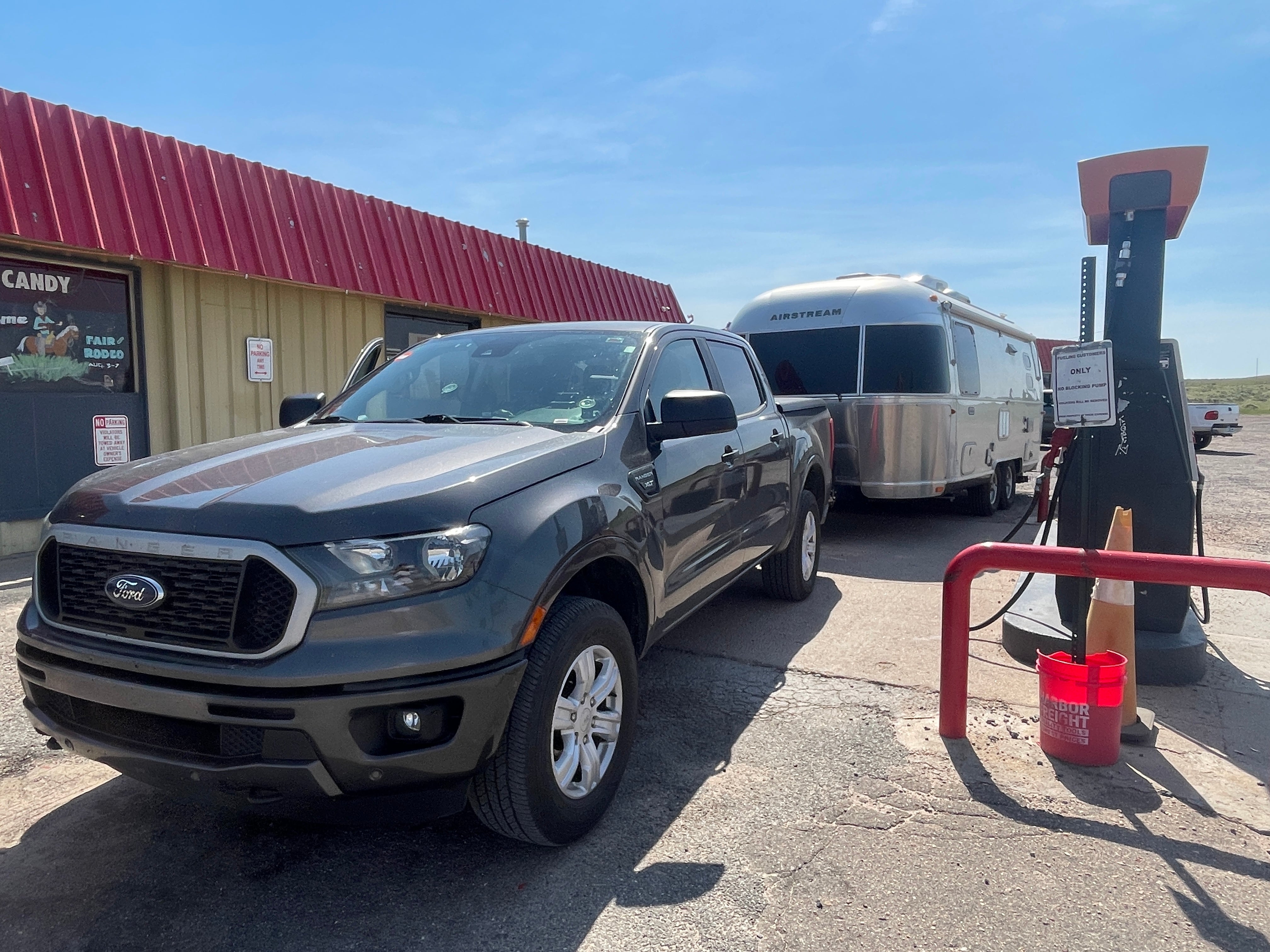
We just returned from a month-long trip to the upper Midwest, where temperatures and humidity were higher than average nearly everywhere we camped. Basically, no matter where we were, it was HOT. Case in point: during a stopover in Denver a few weeks ago, the high was 100 degrees, both days. Yes, Denver.
Plus, our visit to Northern Michigan coincided with the heavy smoke plume of the Canadian wildfires, which forced us to alter our plans in the Upper Peninsula of Michigan and head south sooner than expected.
Bottom line is that all of these factors resulted in us keeping the windows closed and the air conditioning running much more than we anticipated on this trip. Often 24/7.
Not the fresh air and open window experience we were hoping for on this trip, but hey, you can't change the weather (or the trajectory of wildfire smoke).
Which leads me to this important inspection tip...
Regardless whether you're traveling during record highs or not, July and August are notoriously hot and humid months. If you've been camping in high heat and humidity, you've probably been using the air conditioning a lot. That means it's time to inspect your electrical connections–the power plug, 7-way plug, and electrical adapters–for signs of heat buildup.
Here's the thing: When it's hot and you're running the air conditioner a lot, your power plug, 7-way plug, and electrical adapters are under a lot of stress. If any of these connectors are dirty, the plug or adapter will overheat. And if the connector overheats, it will melt, possibly start a fire, or as two of our Airstreamer friends reported happening to them a few years ago, "blow"–causing a popping noise and a plume of smoke. Here's the end result:

If you think this can't happen to experienced RVers, you would be incorrect. Those friends have been Airstreaming for decades, and are currently full-timers.
We are not immune, either. On a hot and humid trip to Pennsylvania few years ago, I unplugged our power cord and it nearly burned my hand. Upon inspection, it looked like this:

We'd been so busy on that trip that we had forgotten to inspect our plugs and adapters, until it was too late. (Yes, a cord that looks like that must be replaced.)
How to inspect and maintain electrical connectors
If you are a regular reader of ours you may be annoyed at how many times we talk about this. But the reason we do is that we regularly hear from people who've skipped it–only to have their plugs or adapters melt and/or catch fire.
So at the risk of being annoying, read this blog, which explains the simple, step-by-step process of inspecting and cleaning your connectors. It includes photos of each step. It also includes a video.
In a nutshell, you're looking for signs of corrosion on the metal of the connector, like that green stuff you can see in the photo below. If you find that any part of the connector has turned green, yellow, brown, or even black, it needs immediate cleaning.

"But I have a SmartPlug..."
So do we. It's a great product and a big improvement over the old "twist-lock" plugs everyone used for decades. But it still needs regular inspection. Although it's true that the SmartPlug has more robust connectors and is less likely to melt down. That doesn't mean it won't.
Case in point, here's a photo sent by a friend with a SmartPlug. She asked if it was okay for her to keep using it. You can probably guess what our answer was.

So even if you have a SmartPlug, if you've been traveling in the summer heat, inspect it now.
And remember that the 7-way plug and your adapters (aka, "dogbones") can also corrode in the heat. So, you've got to inspect them too.
Want to worry less and shorten your maintenance task list?
We do too. Which is why we switched to a nickel-plated power plug and electrical adapters. Nickel plating is far superior to the brass most electrical connectors are made of, because it resists corrosion.
But the vast majority of RV power cords, 7-way plugs, and dog bone adapters are made of brass, which corrodes easily. Cords made for high-power uses (think electric cars) and humid environments (think boats) are made with nickel plating over the brass, which resists corrosion.
Sadly, the RV industry has not moved in the direction of making power cords and 7-way adapters with nickel-plated brass. Nickel-plated RV replacement cords are rare. This may change in the future, but for now, you'll need to do some research to find a good option for your needs.
The power cord head replacement we chose has been working very well for us. When we inspected it last week on one of the final days of our long trip, it was still clean with no buildup:

If you're not comfortable replacing the power cord head, there is another simple change you can make to reduce corrosion buildup and the risk of meltdowns immediately: Upgrade your electrical adapters ("dog bones") to nickel-plated ones.
When we decided to upgrade ours, we couldn't find a product that met our standards. So we designed our own Nickel-Plated Power Adapter Set. Swapping your power adapters is a small step. But it can make a meaningful difference in reducing corrosion buildup and electrical connector cleaning tasks.
2 comments
Greg Heffington
It seems like a simple task and yet, the problem is not always obvious. We had our air conditioner work adequately although not great and one afternoon came “home” to a non-functional unit. It took a while to diagnose the problem which ended up being a complete short in the junction box inside the air conditioner (accessible inside the trailer). It would seem that all of the vibration of hauling around, the wire nuts got just loose enough to finally short out due to heat. Once I repaired the connection, the actual output from the air conditioner improved significantly. It is not always as simple as maintenance of what you can see or access easily.
Dean Bard
Thanks for the information, I was not aware of using nickel plated adapters